


Greetings from scenic State College, PA! The trees are barren, the temperatures are single digits, and I am in heaven. It’s been nearly 16 years since I last saw snow, so this trip has been a wonderland of salt-encrusted sidewalks and ploughed piles of white and gray looming in the corners of parking lots. Will I eat shit on my first patch of ice? Who knows! Truly a mysterious and magical time of year.
For my first full-length update, I figure it’d be good to give a general rundown of the site. What are its purposes, goals, thoughts, feelings, dreams, etc. etc.? There’s a lot to discuss here, but basically I guess it’s here to just hang out. I wanted to make a site where I don't stress about branding and career junk and instead focus on building something where I can share stuff without the dread of being perceived on social media. Low stakes kinda situation to defuse the boiling cauldron of anxiety that’s been building since grad school. That’s not to say I won’t be doing research here, but I thought it’d be nice to just make things for fun again, so I’m using this website as a way of encouraging that. And now that blogging is dead, it also seemed like the perfect time to make a blog that like five people will read. But hey, I’m glad you’re here, reader number four.
My other reason for creating this site is because I’ve been working on a little project since 2021 collecting and documenting the stuff that people write on and around video games. Writing on video game writing tends to break down into several specific areas (linked with some examples which honestly all overlap in various ways):
Platform and Corporate Communication
Writing on Game Studies Research and Scholarship
There are probably more categories I’m forgetting, and while this is certainly a lot, I noticed that there is one pretty prominent form of writing that still hasn’t gotten a ton of attention. If you come from a certain era of gaming or you’re currently stockpiling physical games for the inevitable digital media apocalypse, you’re probably well-acquainted with the writing that players produce to preserve, record, and memorialize their progress through video games. Currently, we do see a lot of conversation around this topic in terms of writing on forums and, especially, about video content on YouTube and Twitch. That stuff is rad, but what I’m interested in is taking a look back to the days when players used pencil, pen, marker, maybe even a blunt or sharp object (more on this in a later post) to hand-write their thoughts, favorite codes, maps, etc. on found materials or those included with the game:
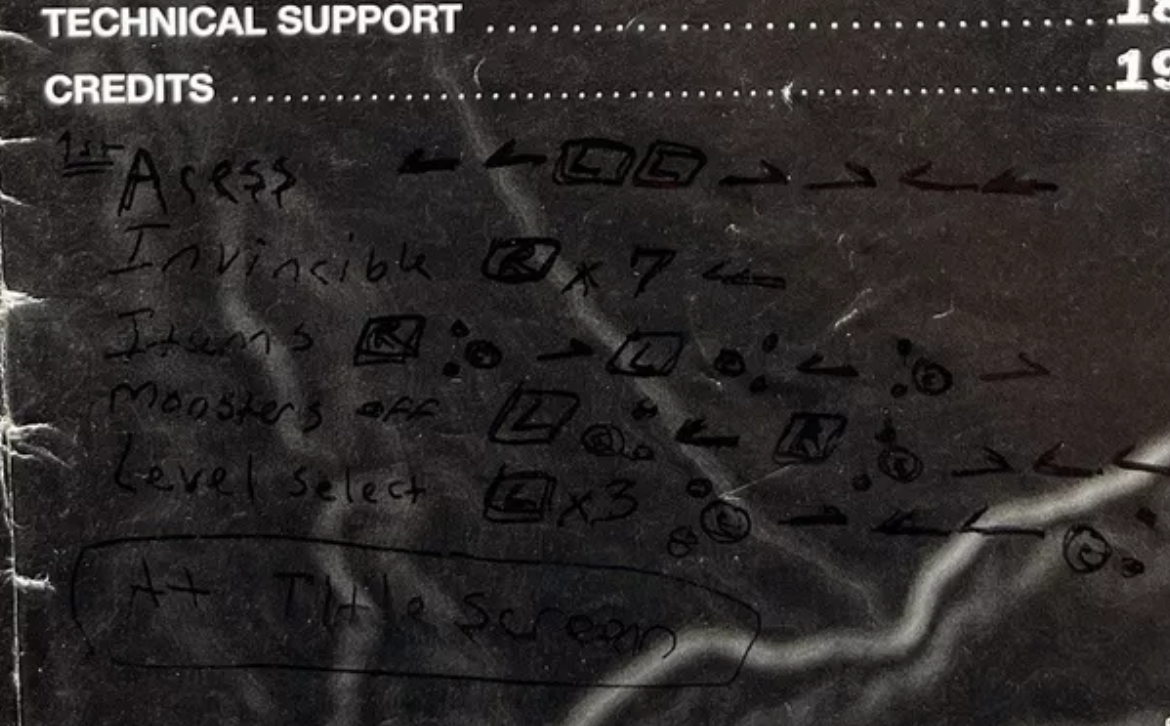
Figure 1: Cheat Codes Written at the Bottom of a Duke Nukem 64 Instruction Manual
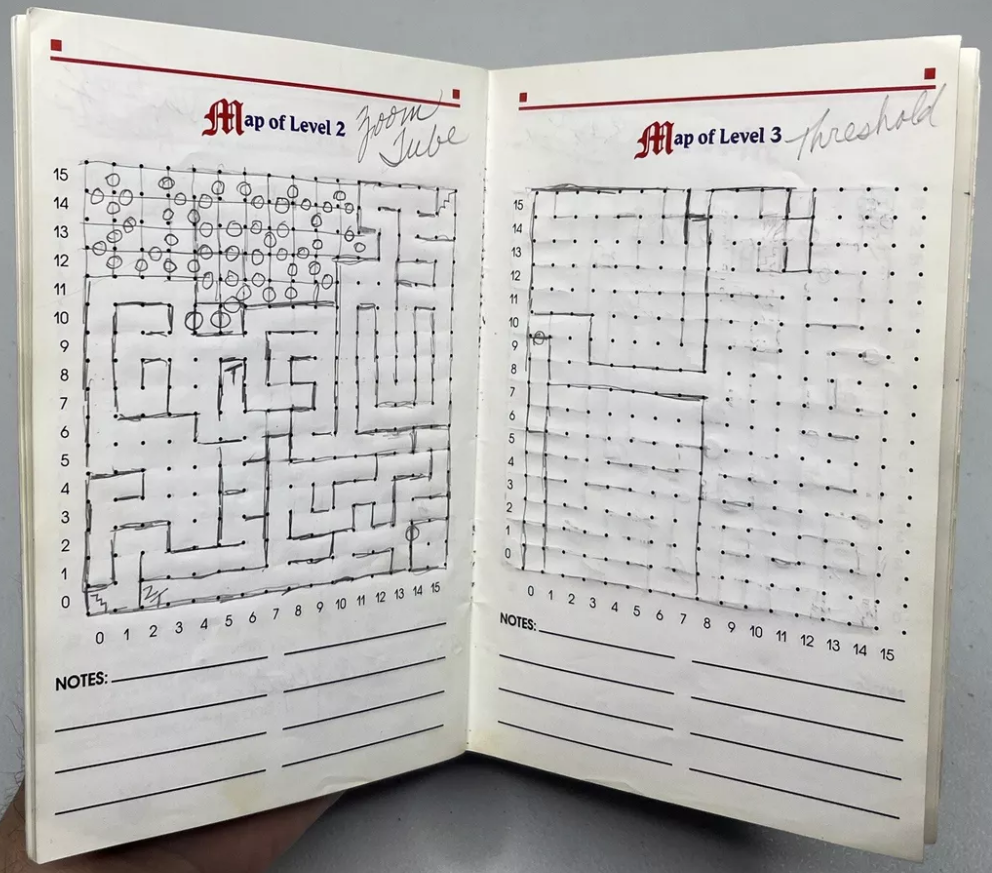
Figure 2: Maps Drawn in a Swords and Serpents Instruction Manual
While I couldn’t give an exact date or history for when this practice began, it almost certainly emerges from a longer legacy of spatial mapping emerging from specific cultures and inheriting all the colonial baggage that comes with that legacy–something to absolutely delve into more via postphenomenology in another blog update. For the purposes of this first baby blog, however, I’d place a temporary pin around…eh, let’s say early computing and the inclusion of notes sections in software manuals. Video game manuals, specifically, included a section in the last couple of pages for notes where players could record high scores, clues to solving puzzles, passwords, small maps, basically anything they might want to write. Some game manuals, such as the one included with Nintendo's The Legend of Zelda for the Nintendo Entertainment System, even included instructions for how to make useful notes that could assist players at a later date:
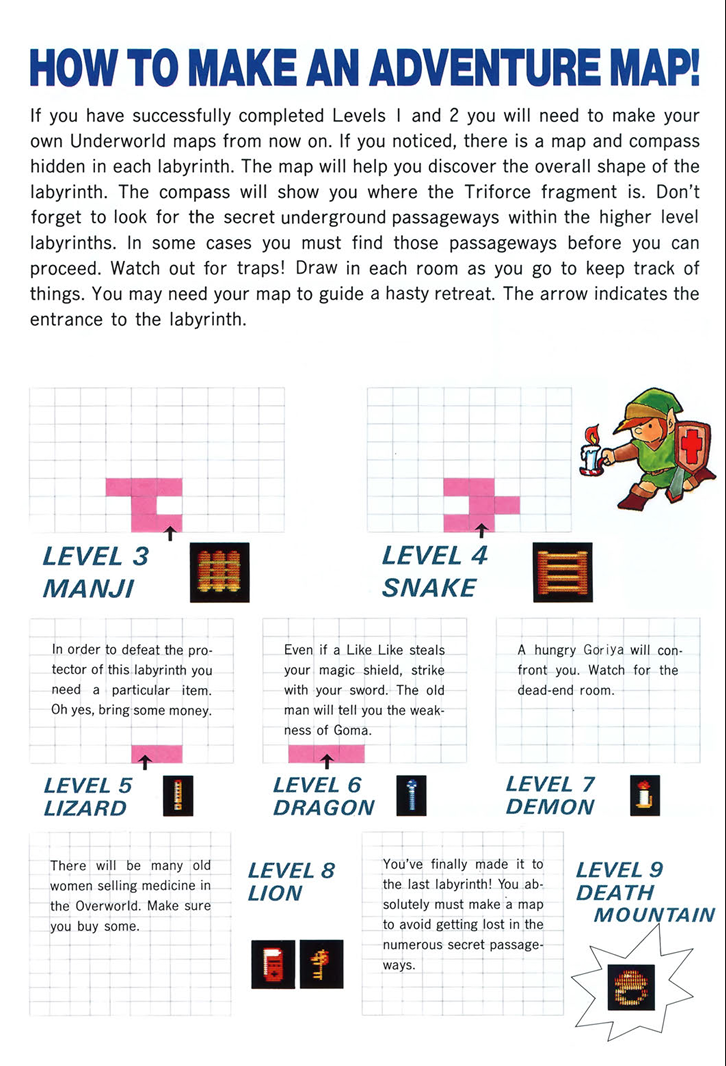
Figure 3: The Legend of Zelda Map Making Instructions
This practice became something of a writing genre unto itself, and later games such as Dynamix's The Adventures of Willy Beamish and Rare's Donkey Kong Country would provide their own forms of meta-commentary on this practice.

Figure 4: The Official Willy Beamish Instruction Manual Written and Designed in the Style of Handmade Notes
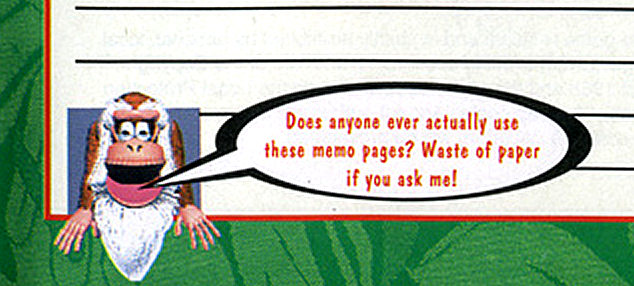
Figure 5: Cranky Kong Commenting on the Inclusion of a Notes Section (also referred to as the "Memo" section) in the Donkey Kong Country Manual
Meanwhile Infocom's Infidel and Sir-Tech's Advanced Dungeons and Dragons: Eye of the Beholder included pre-made maps and notes that directly mimic the mapping and notetaking practices that players had settled into around that time and makes it part of the in-game characters’ own writing practices:
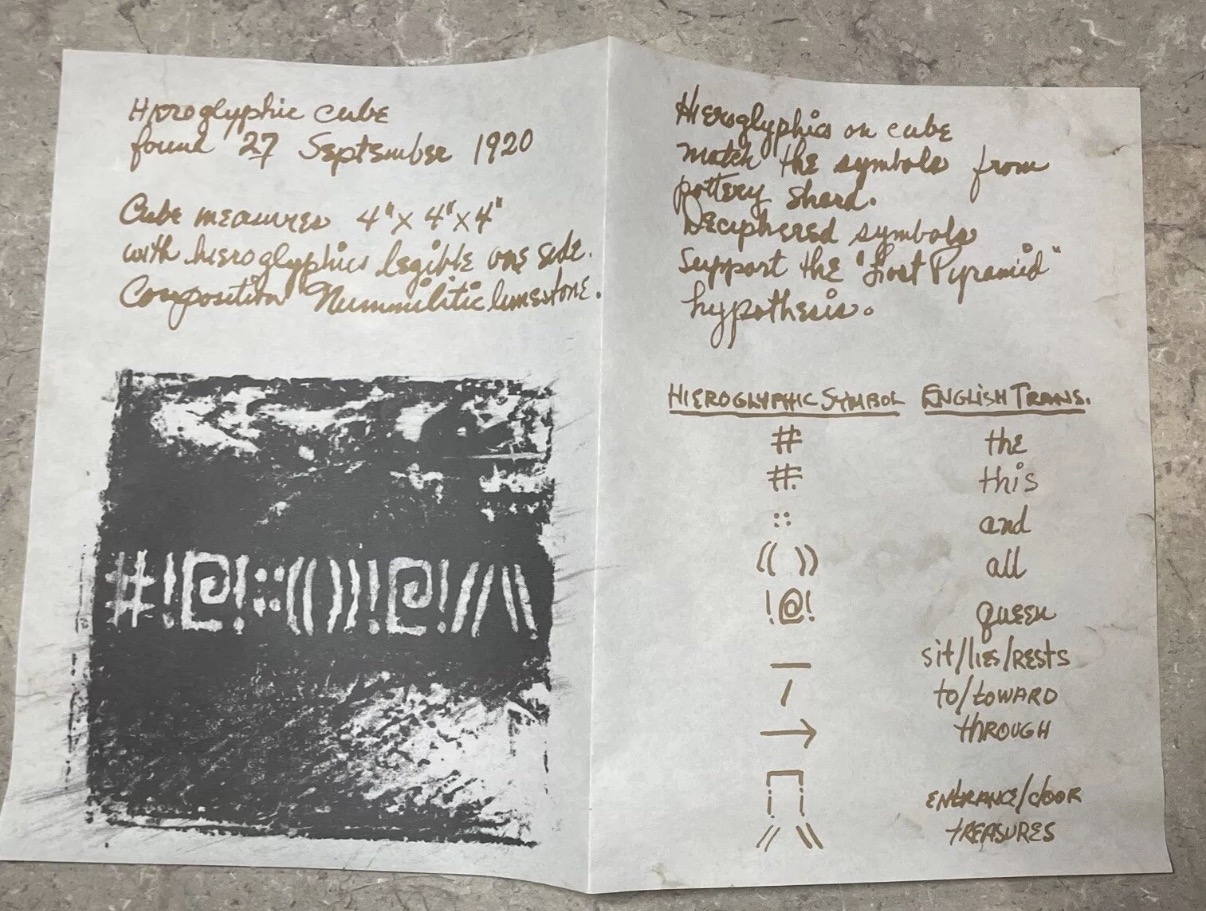
Figure 6: Infidel Insert Resembling both Translation and Gameplay Notes
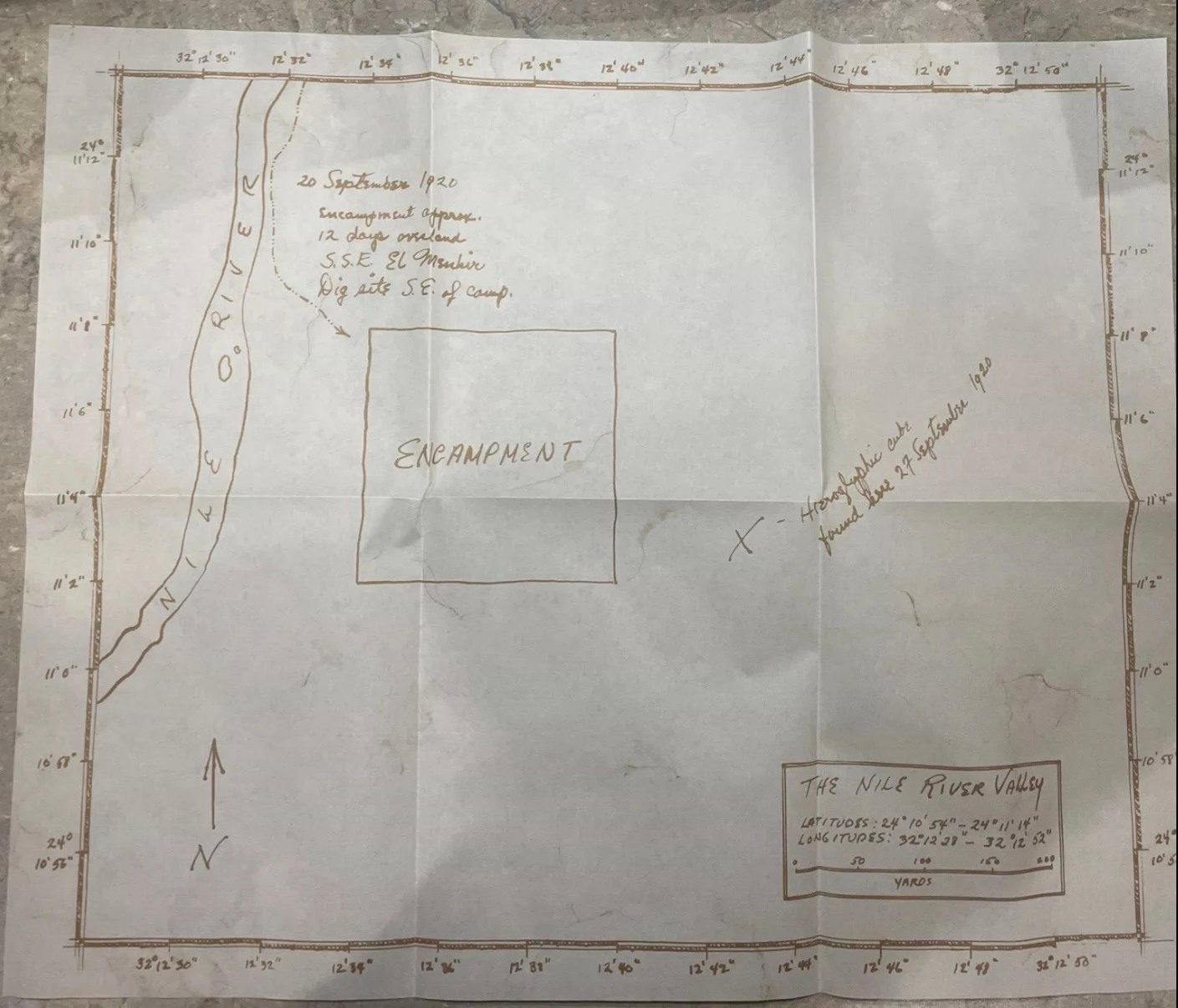
Figure 7: Infidel Map Insert
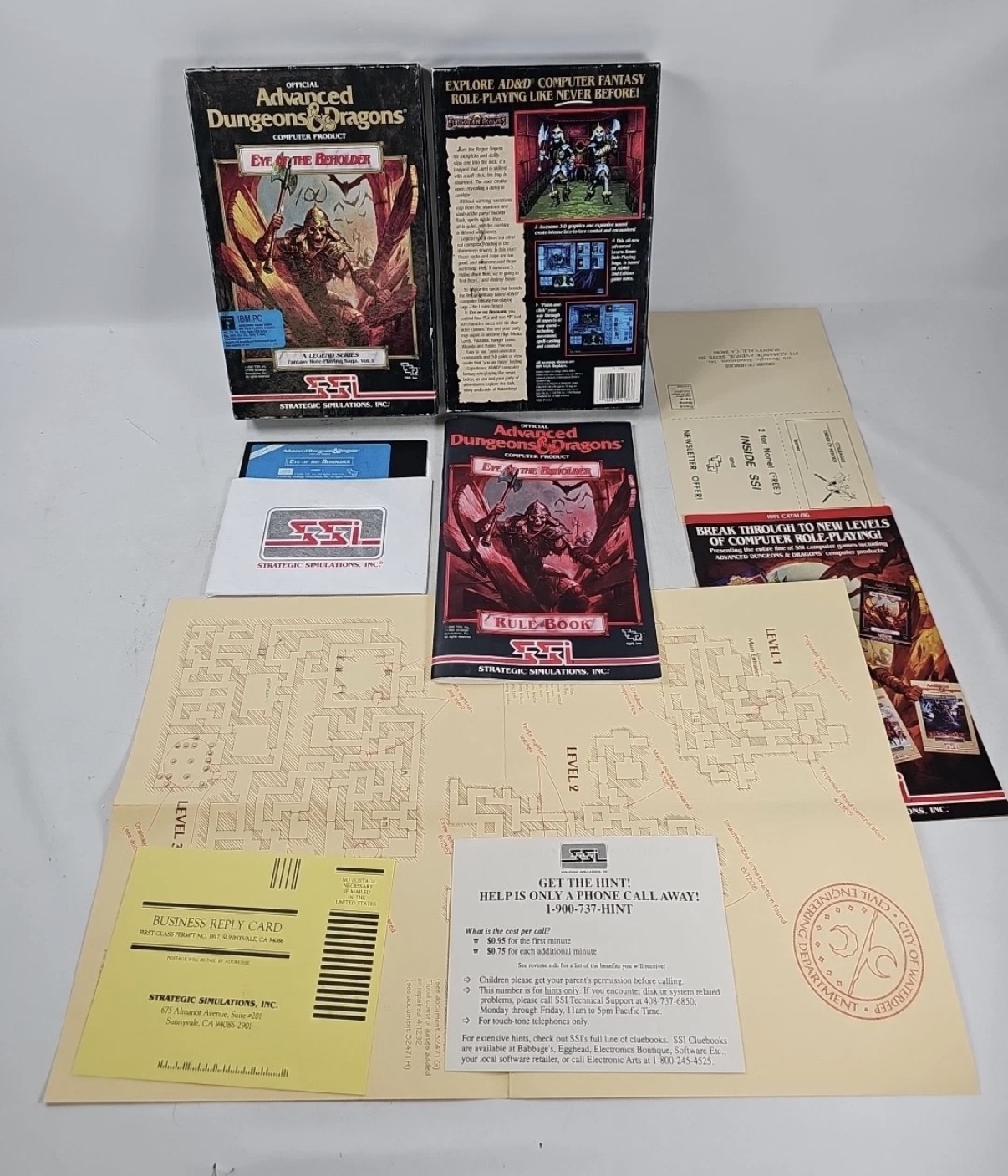
Figure 8: Advanced Dungeons and Dragons: Eye of the Beholder with Map Insert and Annotations
Whereas both Infidel and Advanced Dungeons and Dragons: Eye of the Beholder include pre-filled maps for players to reference without making their own, other PC games such as Darkspyre and Wizardry would pre-emptively include graph paper and note pads in anticipation of players writing and sketching their way through these spaces:
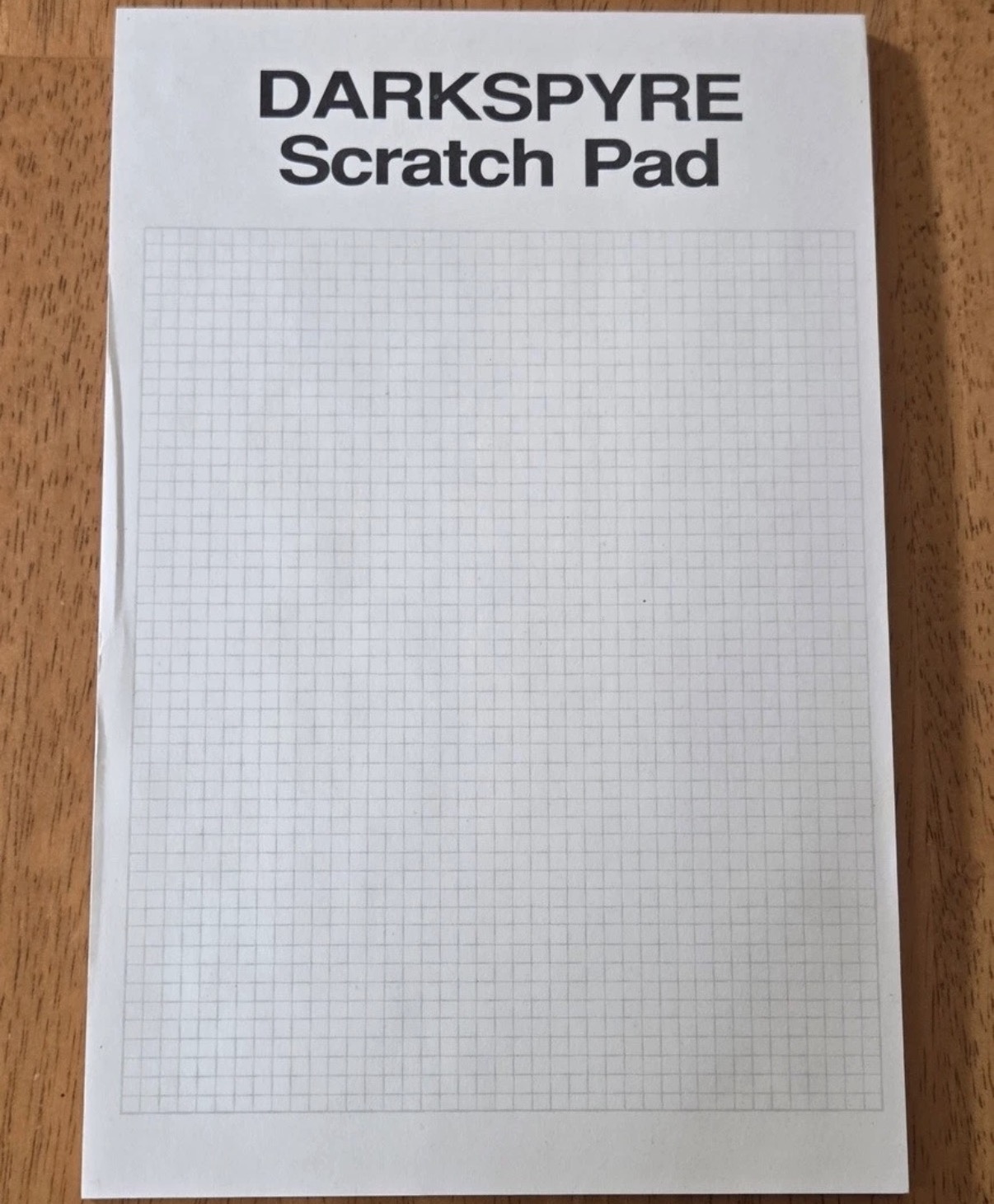
Figure 9: Darkspyre Included Graph Paper 'Scratch' Pad
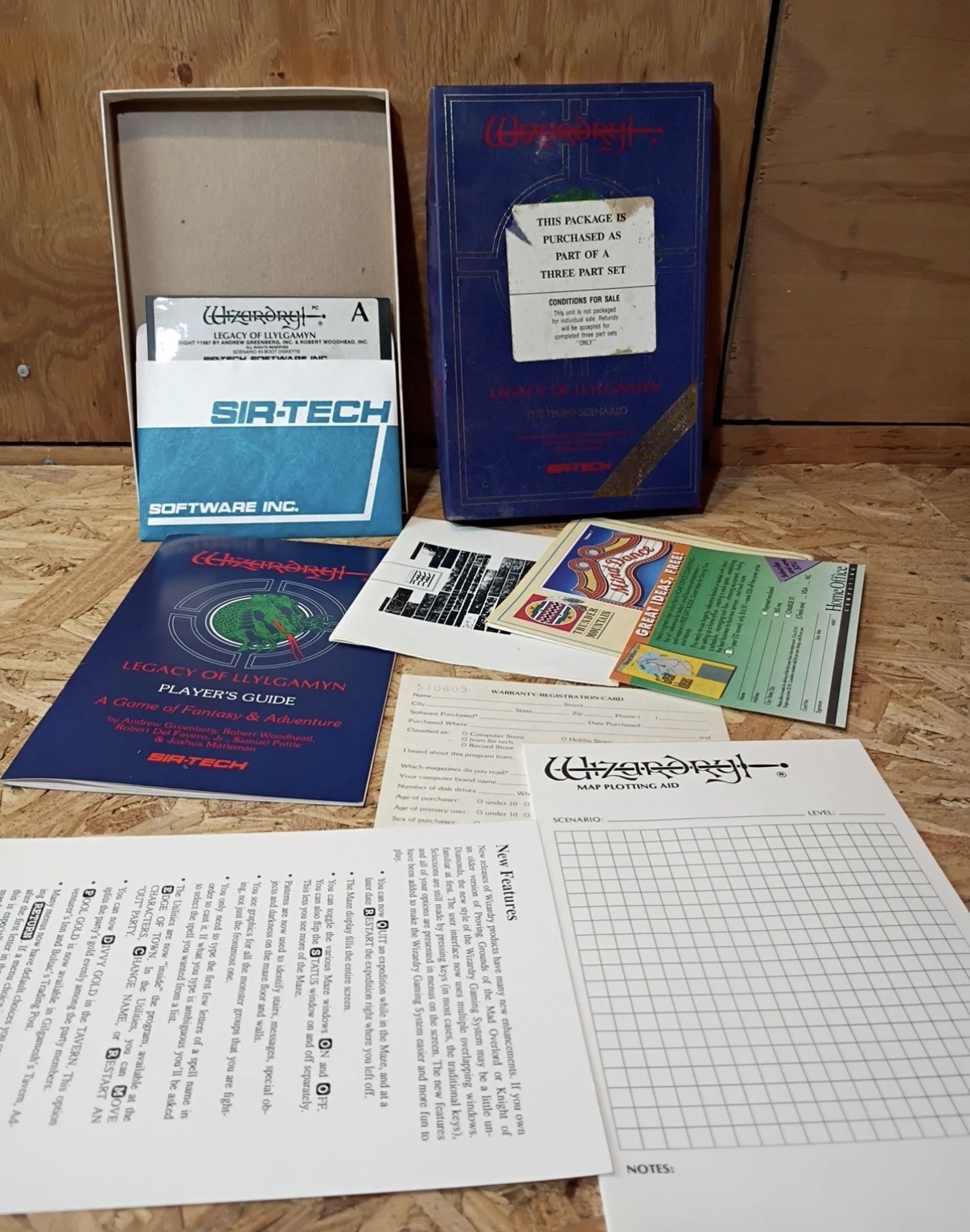
Figure 10: Wizardry Inserts Featuring a 'Map Plotting Pad'
Even more recent releases such as Diablo 3 and Starcraft 2 include notepads as pack-in objects for players to write with. These contemporary inserts could provide an interesting opportunity to compare how many players used the note materials included in these more recent titles with those included in older pc titles.
As manuals (and physical materials entirely) have slowly faded from the mass market, this practice has taken on new forms of documenting and curating gameplay in the form of Let’s Plays, YT commentary, online posts, etc. Yet this video- and posting-based content is largely made for a different media environment, one that is almost always created with an audience and algorithm in mind. Early forms of player writing are much more personal and intimate, sometimes revealing things about a player’s experience that they would never express in a public forum. We might think of them as a kind of “player diary.” In that sense, they can offer us a different perspective on the relationship between players, play, and video games that (I think anyway) is worth preserving. Some of these notes and drawings are also incredibly intricate and (in my estimate) qualify as both tutorial and visual art. In short, there’s a lot of neat stuff here that I think is worth looking at, thinking about, and discussing!
What to call these materials, then? Well, recently Hayes Madsen shared these images on Bluesky from Hironobu Sakaguchi’s Twitter account:
Sakaguchi tweets that these images are “From the FF3 planning document.” These images share an incredible amount in common with those created in, for instance, one player’s playthrough of Sorcerian. While Sakaguchi’s documents are better organized and labeled, much of the annotation format and ways of representing game spaces displays many similarities. And while Sakaguchi used these to construct and compose Final Fantasy 3’s game world, players’ maps emerge from a practice of deconstructing these spaces and then reassembling through forms of literacy that make sense to them as they return to re-read these documents. Like, “I read game spaces/mechanics/story this way, so my notes are not just direct translations of the game space but also expressions of my own ways of reading/thinking that the game has been filtered through. I’ve inscribed these personal qualities in the ways I’ve recorded this information.” Effectively, these layers of translation, then, leave us with an interesting case of the palimpsest from the original design document as it passes from designer, into game, to player, and back onto page…although, I’m not sure if I really consider it an erasure or an expansion. Either way, we might call these “playing documents” to compliment the other side of Sakaguchi’s “planning document.”
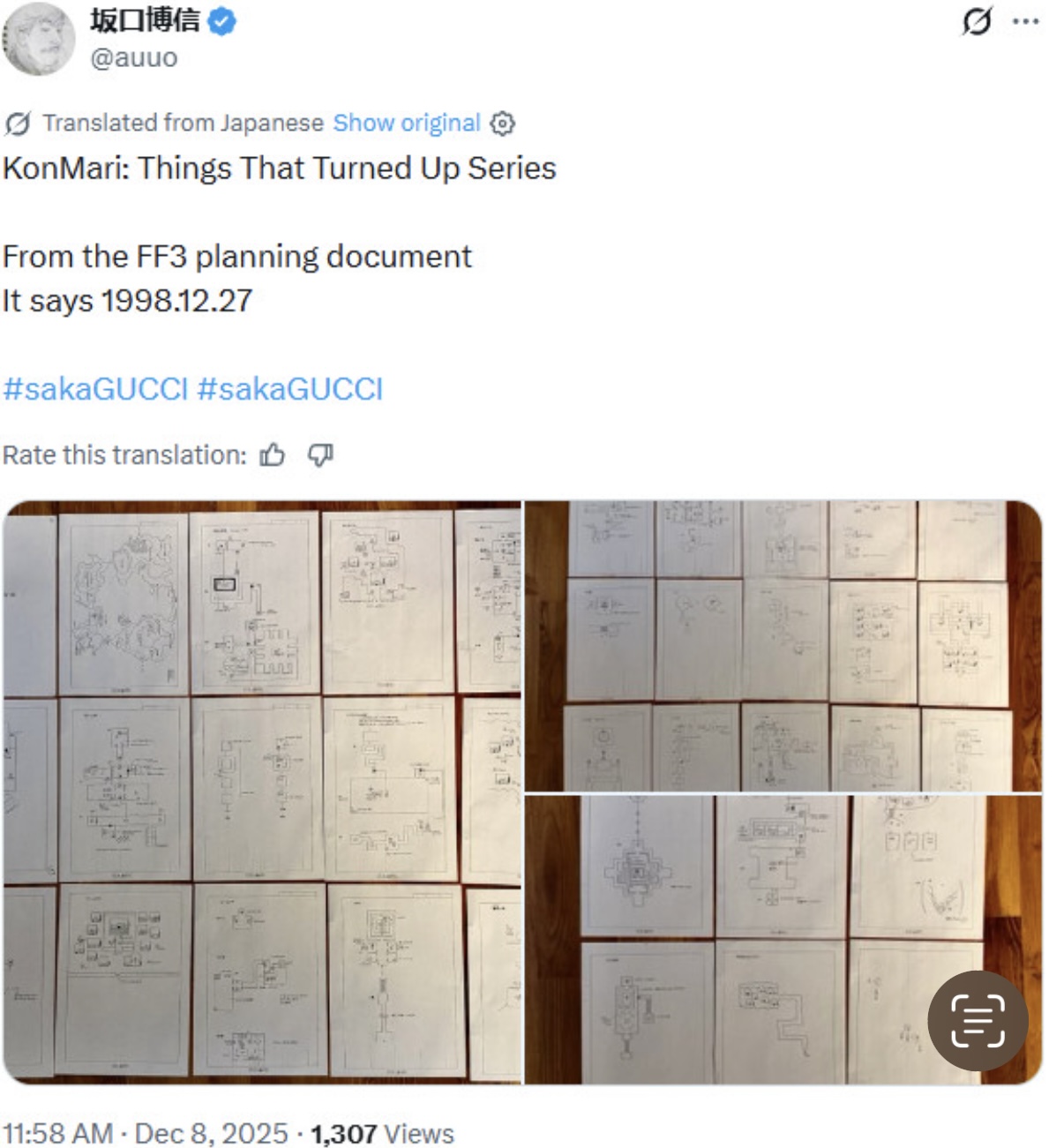
Figure 11: Hironobu Sakaguchi Planning Document Tweet
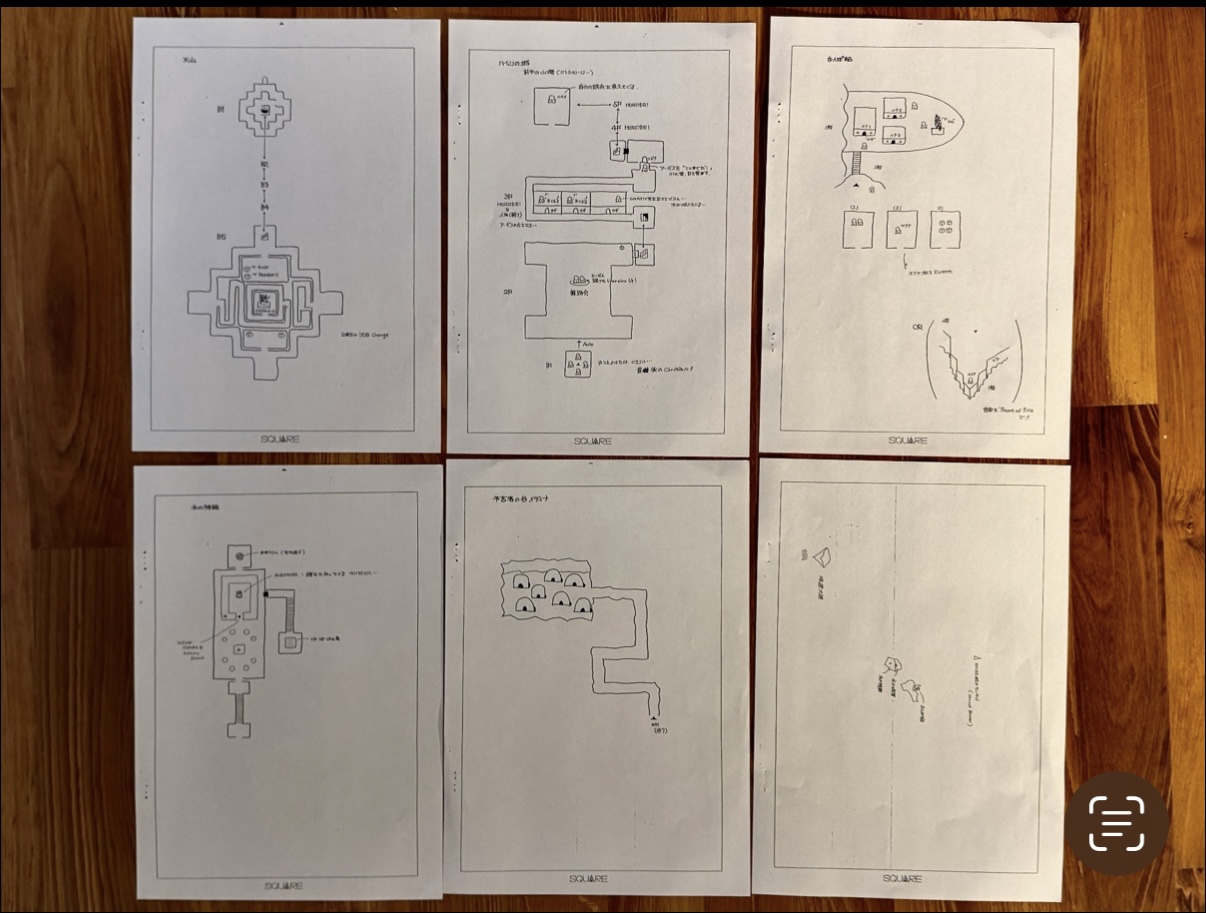
Figure 12: Planning Documents
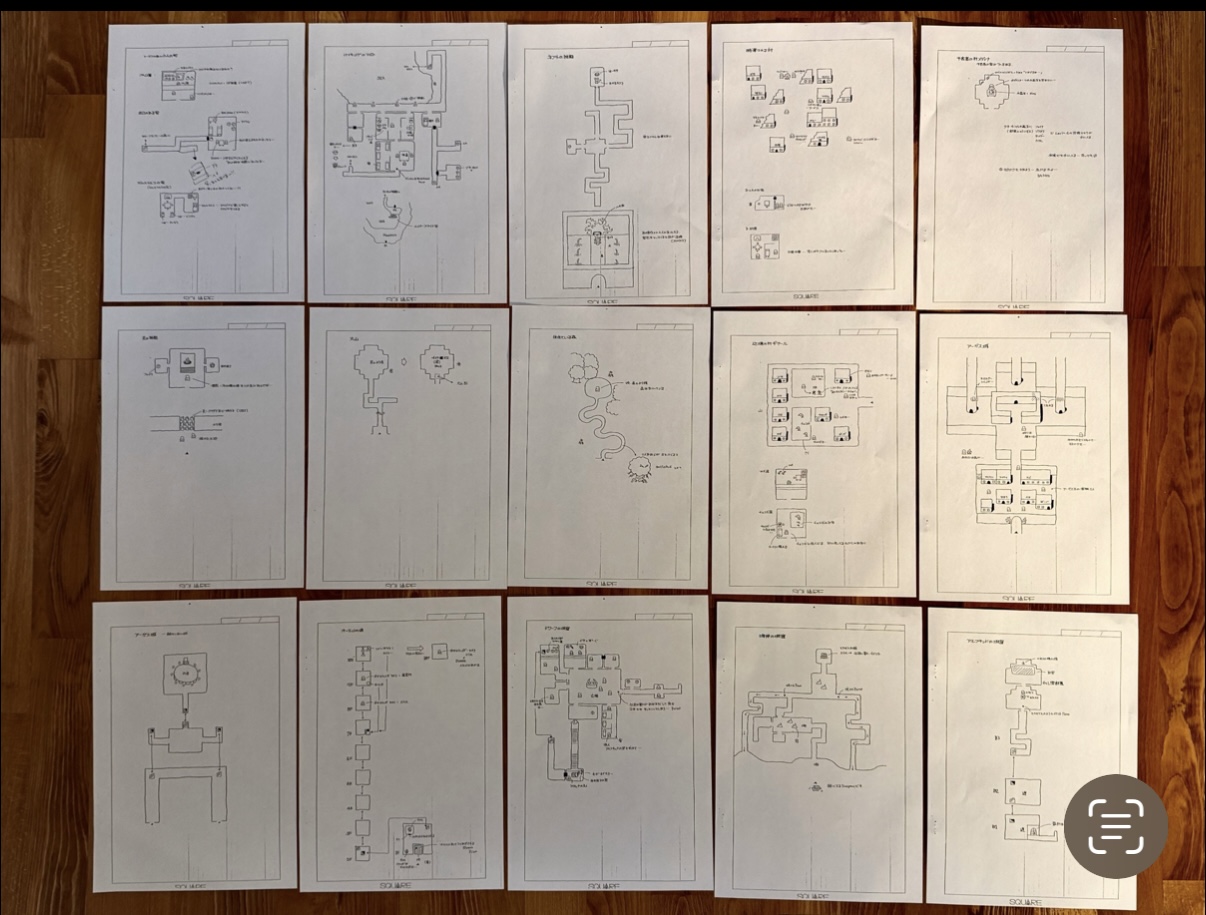
Figure 13: Planning Documents
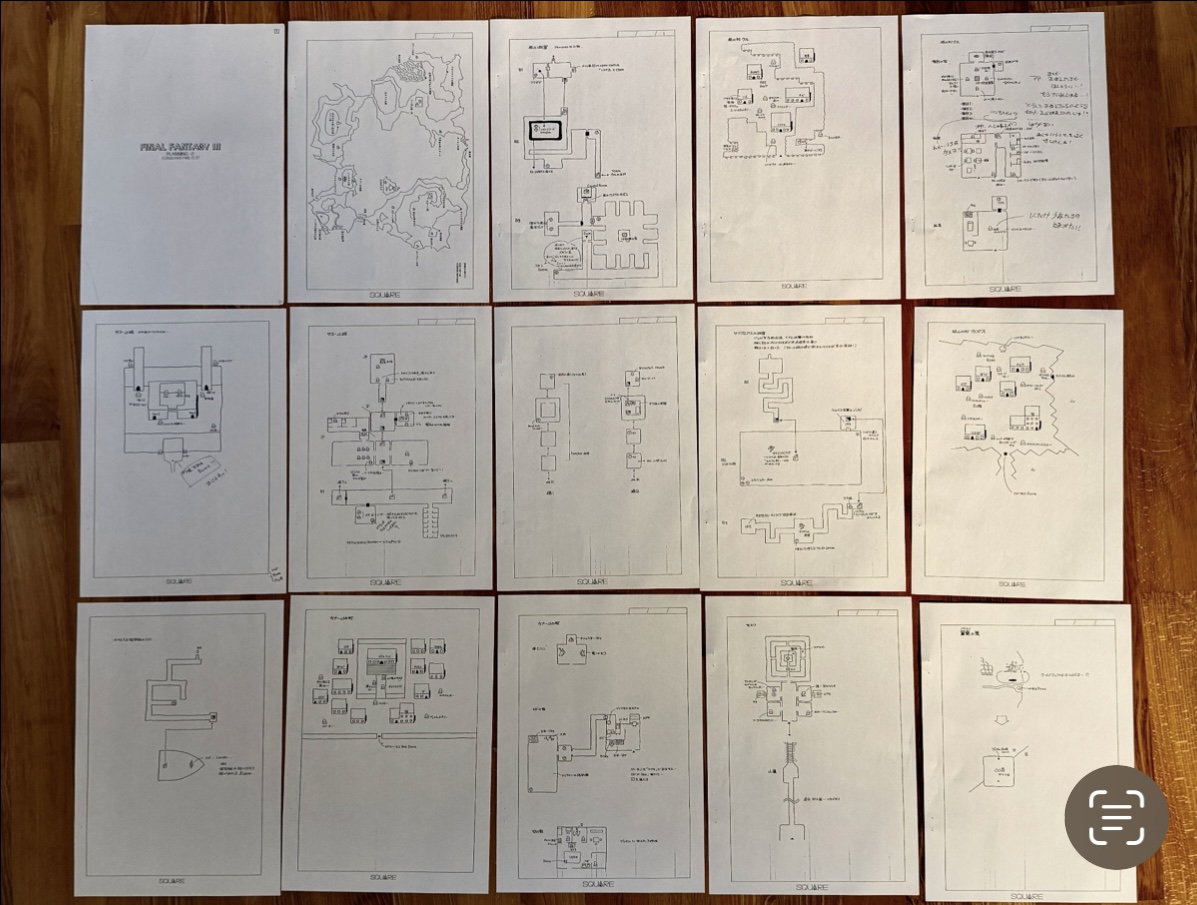
Figure 14: Planning Documents
Alright, so, there might be some interesting theory and research potential here, but why an archive? Isn’t that more than is necessary for this stuff? Well, part of the motivation here is because these materials are vanishing. In addition to the general disappearance of physical game media, the rise of collector markets has resulted in mixed treatment of these materials. Some collectors and resellers see these materials as important documents from the time and retain them to attract buyers who are interested in preserving a piece of that history. These materials remain as they allow resellers to market the "aura" of a specific object from a specific era to increase the object’s perceived value. Another part of the collectors market, however, sees handwriting and old notes as decreasing the value of older games. The value for these folks is in a pure form of the object itself with any traces of the role it played in previous lives "cleaned" away or completely erased. And while this latter group may make the former appear somewhat noble, it’s important to remember that their core goal of both groups is to make money, so much like ROM hoarders who refuse to allow preservation groups to dump beta and unreleased games, they can refuse to share these materials to maintain an allure of mystery around a physical game’s contents.
I don’t want these materials to disappear, and I also don’t want to see them locked behind acrylic collecting dust on a shelf. So, considering these factors, I thought I would start seeking out and scanning/photographing these kinds of writing. Therefore, to go way back to the start of this post, the other motivation for this website is: provide an archive of player diaries/playing documents.
Since I began this work, the always wonderful Video Game History Foundation has created a fully searchable database of their magazine scans which includes some examples of these materials. It’s great seeing them formally acknowledged in the VGHF library, but there’s still so much more out there! So, I’d like to end this post repeating the call in post 0. If you have any materials like this and want to see them preserved in the archive, please email them! I will be sure to credit and include any information that you’d like to see posted. My dream is to have this site become a place where future researchers and people generally interested in gaming culture from these eras can see this form of interaction that players were engaging in with video games before it becomes lost to time. Maybe they’ll have some cool stuff to say about them. Maybe a kid who is now an adult will see some maps they drew and have a personally resonant moment. Who knows? Dear fifth reader from 2097, how is it? Are these materials still interesting? Are you still making little doodles and notes about video games? I hope so.
Special thanks to Dr. Hong-An Wu and Dr. Josef Nguyen for inviting me to give a talk on this project at The Studio for Mediating Play at The University of Texas at Dallas in 2024. This project would not be what it is today without the space to share, discuss, and develop these thoughts. I remain deeply grateful for their support and encouragement. Going forward, I’ll start talking a bit more directly about specific objects in the collection and different ways we might interpret, study, and engage them. Until next time.
The first update! The site is still a bit of a mess and links are kinda goobered up (also, sorry mobile users about the inconsistent page sizes ;-;), but I've set up the manual scans section and added scans of a really awesome and comprehensive series of documents covering a playthrough of Sorcerian. I have also included a fascinating found object on which someone wrote codes for one of the Harry Potter games. I'll keep rolling these out, but please feel free to send in your own to my email. All contributions will be properly credited and cited however you prefer!